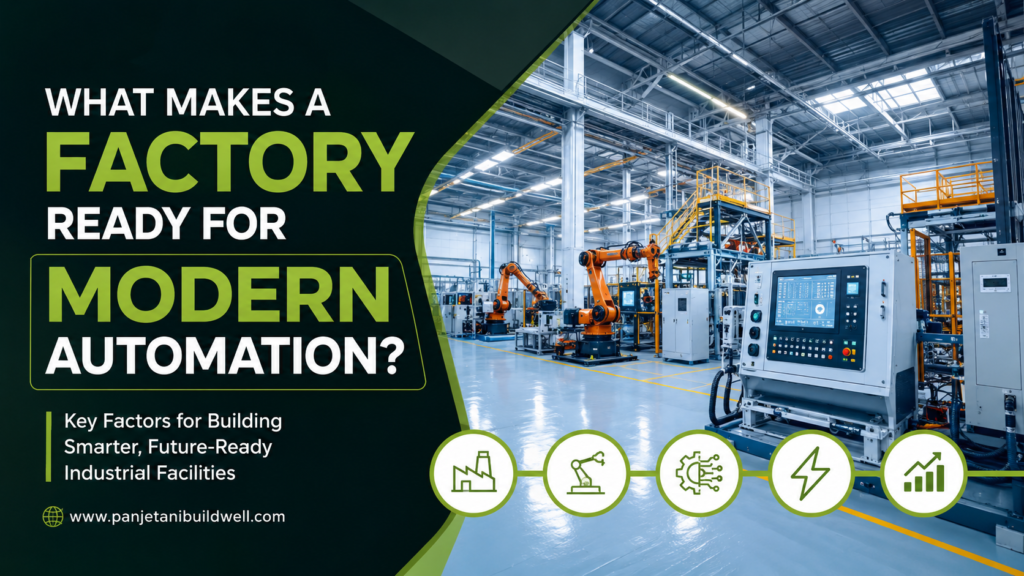

Modern manufacturing is becoming faster, smarter and more efficient. Factory automation helps businesses improve production by using machines, sensors, control systems and software with less manual intervention.
From material handling to quality inspection, automation can make manufacturing processes more consistent and reliable.
What Is Factory Automation?
Factory automation is the use of technology to control and perform manufacturing operations with limited human involvement. Common technologies include industrial robots, PLCs, sensors, conveyors and automated inspection systems.
The goal is not simply to replace manual work but to create a safer, faster and more consistent production environment.
How Factory Automation Improves Manufacturing
As production demands increase, manufacturers need to maintain quality while controlling costs and reducing downtime.
Automation can help businesses achieve:
- Higher production efficiency
- Consistent product quality
- Reduced human errors
- Improved workplace safety
- Better use of production data
- Faster and more reliable operations
Types of Factory Automation
Different factories require different levels of automation depending on their production process and volume.
Fixed Automation
Fixed automation is designed for repetitive, high-volume operations. Equipment performs a predefined sequence of tasks with limited flexibility.
Programmable Automation
Programmable systems can be adjusted for different production batches. They are useful when manufacturers need to produce different products using the same equipment.
Flexible Automation
Flexible automation provides greater adaptability and allows manufacturers to handle product variations with fewer changes to the production system.
Key Benefits of Factory Automation
Factory Automation and Higher Productivity
Automated machines can perform repetitive operations continuously and maintain consistent operating speeds, helping businesses increase output.
Better Quality
Automated systems follow predefined parameters, reducing variations and improving consistency across production.
Improved Safety
Automation can take over hazardous, heavy or repetitive tasks, allowing employees to focus on supervision, maintenance and other higher-value activities.
Reduced Errors
Programmed processes can reduce mistakes associated with repetitive manual operations and improve overall process consistency.
The Future of Manufacturing
The future of manufacturing is becoming increasingly connected. Technologies such as industrial robots, machine vision, Industrial IoT, artificial intelligence and predictive maintenance are making production systems more intelligent.
These technologies can help manufacturers monitor equipment, identify problems earlier and make better production decisions.
smart manufacturing technologies → NIST – Smart Manufacturing
Conclusion
Factory automation is becoming an important part of modern manufacturing. It can improve productivity, quality, safety and process visibility while helping businesses prepare for future production demands.
However, successful implementation requires proper planning and the right technology for each application. With a well-designed approach, manufacturers can build a more efficient and future-ready production environment.
Frequently Asked Questions
What is factory automation?
It is the use of machines, control systems and software to perform manufacturing processes with limited manual intervention.
What are its main benefits?
The main benefits include higher productivity, consistent quality, improved safety and fewer production errors.
Is automation suitable for every factory?
The suitable level of automation depends on production volume, process complexity, product variation and investment requirements.