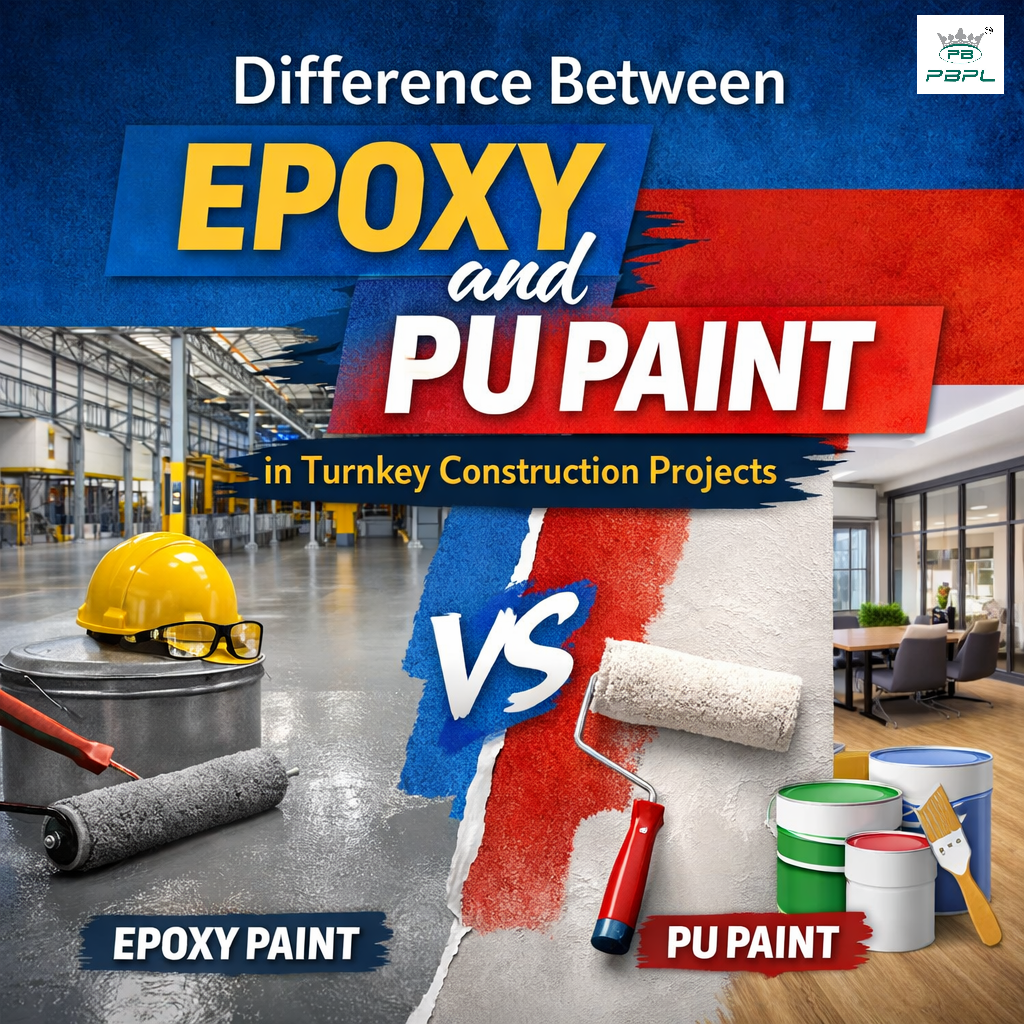

Introduction
A crucial choice in turnkey building projects is selecting the appropriate paint system. Durability, safety, maintenance costs, and overall project quality are all directly impacted by the differences between epoxy and PU paint.
Despite their widespread use in commercial and industrial structures, these coatings have distinct functions. Therefore, project owners can make better selections if they know where and why each color is used.
In this blog, we explain the difference between epoxy and PU paint in a simple and practical way.
What Is Epoxy Paint?
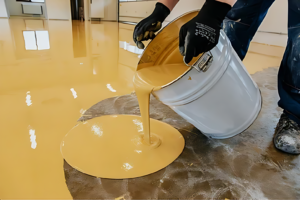
Epoxy resin and a hardener are combined to create epoxy paint, a two-component painting technique. It creates a surface that is extremely robust, hard, and rigid after curing.
Key Features of Epoxy Paint
- Excellent resistance to chemicals
- High capacity to support loads
- Good adherence to steel and concrete
- A firm, smooth surface finish
- Limited adaptability
Epoxy paint is frequently utilized in heavy-duty locations and industrial flooring due to these qualities.
What Is PU Paint?
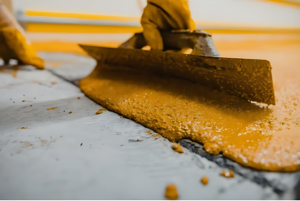
Polyurethane paint, sometimes referred to as PU paint, is an elastic and flexible covering that offers both protection and visual appeal.
Key Features of PU Paint
- High flexibility and elasticity
- Superior UV resistance
- Smooth and glossy appearance
- Better scratch resistance
- Suitable for indoor and outdoor use
As a result, PU paint is preferred for interiors, façades, and exposed surfaces.
Difference Between Epoxy and PU Paint
Understanding the difference between epoxy and PU paint becomes easier when we compare their performance parameters.
| Parameter | Epoxy Paint | PU Paint |
| Flexibility | Rigid | Flexible |
| UV Resistance | Low | High |
| Surface Finish | Hard, matte/semi-gloss | Smooth, glossy |
| Chemical Resistance | Very high | Moderate |
| Weather Resistance | Limited | Excellent |
| Ideal Usage | Industrial floors, factories | Interiors, exteriors, façades |
Difference Between Epoxy and PU Paint in Turnkey Construction
In turnkey construction projects, material selection is based on usage, exposure, and performance needs.
Epoxy Paint Applications in Turnkey Projects
- Factory and warehouse flooring
- Parking areas
- Production zones
- Chemical and industrial plants
Epoxy paint works best in controlled indoor environments where strength is the top priority.
PU Paint Applications in Turnkey Projects
- Commercial building exteriors
- Office interiors
- Industrial façades
- High-visibility areas
PU paint performs well in sunlight-exposed and weather-prone areas.
Which Is Better: Epoxy or PU Paint?
The answer depends on the project requirement.
- Choose epoxy paint if durability, chemical resistance, and load capacity are critical.
- Choose PU paint if flexibility, weather resistance, and finish quality are important.
In many turnkey projects, both systems are used together to achieve optimal performance.
Importance of Choosing the Right Paint in Turnkey Projects
Selecting the wrong coating can lead to:
- Premature surface damage
- Higher maintenance cost
- Safety issues
- Poor aesthetic finish
That is why professional turnkey execution focuses on correct material coordination.
At Panjetani Buildwell, paint systems are selected as part of a comprehensive turnkey approach to ensure long-term durability and quality.
👉 Internal Link (DoFollow):
https://www.panjetanibuildwell.com/turnkey-construction/
Cost Difference Between Epoxy and PU Paint
When comparing the difference between epoxy and PU paint in terms of cost:
- Epoxy paint is generally more economical for large flooring areas.
- PU paint is slightly more expensive due to UV resistance and premium finish.
However, the right selection reduces long-term repair and maintenance expenses.
Industry Reference for Paint Systems
For technical insights into industrial coating technologies and material performance, refer to recognized coating industry resources.
👉 External Link:
https://www.coatingsworld.com
Frequently Asked Questions
What is the main difference between epoxy and PU paint?
The main difference between epoxy and PU paint is flexibility. Epoxy is rigid, while PU is flexible and UV resistant.
Can epoxy paint be used outdoors?
Epoxy paint is not recommended for outdoor use due to low UV resistance.
Is PU paint suitable for industrial flooring?
PU paint can be used in specific flooring applications where flexibility and UV exposure are required.
Can epoxy and PU paint be used together?
Yes, many turnkey projects use epoxy for flooring and PU for walls and exteriors.
Conclusion
Performance, adaptability, and application are where epoxy and PU paint diverge. For industrial flooring, epoxy paint provides unparalleled strength, but PU paint offers better flexibility and weather resistance for both indoor and outdoor applications.
For turnkey building projects to be successful, durability, safety, and long-term value must be guaranteed by selecting the appropriate paint system.
Contact Panjetani Buildwell
Call: +91-9205951100
Website: www.panjetanibuildwell.com
For the most recent advancements, market insights, and project updates, follow Panjetani Buildwell:


