
PUF Panel Heat Insulation has become an essential solution for industrial buildings looking to control indoor temperatures and improve energy efficiency. Excessive heat can increase energy consumption, reduce worker comfort, and affect operational performance. By reducing heat transfer through roofs and walls, PUF panels help create more comfortable and cost-effective industrial spaces.
PUF (Polyurethane Foam) panels are designed with excellent thermal insulation properties that help control heat movement between the external and internal environment.
How PUF Panel Heat Insulation Solves Heat Transfer Challenges
Industrial facilities, warehouses, and manufacturing plants are often exposed to direct sunlight for long hours. Traditional roofing and wall materials absorb heat, causing indoor temperatures to rise significantly.
High indoor temperatures can lead to:
- Increased cooling costs
- Reduced employee productivity
- Higher energy consumption
- Uncomfortable working conditions
- Additional stress on machinery and equipment
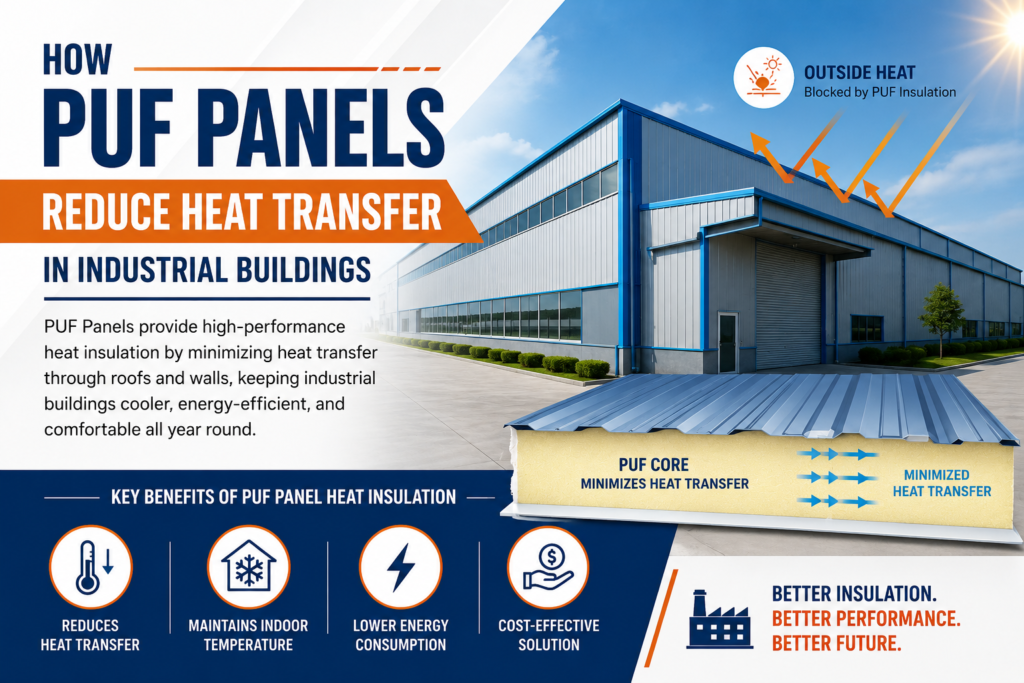
This is where PUF panels reduce heat transfer in industrial buildings by acting as an effective thermal barrier.
How PUF Panel Heat Insulation Works in Industrial Buildings
PUF panels consist of a rigid polyurethane foam core placed between metal sheets. The foam core has a low thermal conductivity, which minimizes heat flow from the outside environment.
Because of this insulation layer, PUF panels reduce heat transfer in industrial buildings by:
- Blocking external heat from entering the building
- Maintaining stable indoor temperatures
- Reducing temperature fluctuations
- Limiting heat absorption through roofs and walls
As a result, facilities remain cooler even during peak summer months.
Benefits of PUF Panel Heat Insulation for Industrial Buildings
PUF Panel Heat Insulation for Lower Energy Consumption
Since PUF panels reduce heat transfer in industrial buildings, cooling systems do not need to work as hard to maintain desired temperatures. This helps lower electricity consumption.
Improved Indoor Comfort
A controlled indoor environment improves working conditions for employees and creates a more productive workspace.
Better Temperature Control
Industrial processes often require stable temperatures. PUF panels help maintain consistent conditions throughout the facility.
Reduced Cooling Costs
One of the biggest advantages of installing insulated panels is the reduction in air conditioning and ventilation expenses.
Industries That Benefit from PUF Panels
Several industries use PUF panels because PUF panels reduce heat transfer in industrial buildings effectively.
These include:
- Warehouses
- Manufacturing units
- Pharmaceutical facilities
- Food processing plants
- Cold storage facilities
- Logistics centers
For these industries, thermal efficiency directly impacts operational performance and long-term cost savings.
Choosing the Right PUF Panel Solution
To maximize insulation performance, businesses should consider:
- Panel thickness requirements
- Building location and climate conditions
- Roof and wall applications
- Energy efficiency goals
- Long-term operational needs
Working with an experienced construction and panel solution provider ensures the right system is selected for the project.
Conclusion
Understanding how PUF panels reduce heat transfer in industrial buildings helps businesses make informed decisions about energy-efficient construction. By minimizing heat flow, maintaining indoor temperatures, and lowering cooling costs, PUF panels offer a practical solution for modern industrial infrastructure.
For industries looking to improve thermal efficiency and reduce operating expenses, PUF panels remain one of the most effective insulation solutions available today.
For more information on energy-efficient building practices, refer to the Bureau of Energy Efficiency (BEE).